Thinking about buying a rental property in Pompano Beach? You are not alone, and you are right to look closely before jumping in. This market offers real opportunity, but the smartest investors know that purchase price is only part of the story. If you want to invest with more confidence, this guide will help you compare property types, rental strategies, and local rules so you can make a more informed move. Let’s dive in.
Why Pompano Beach Gets Investor Attention
Pompano Beach has a meaningful renter base, which is one reason many small investors keep it on their radar. Census QuickFacts shows 53.6% of homes in Pompano Beach are owner-occupied, compared with 63.6% in Broward County overall. The city also reached an estimated population of 118,104 in July 2024, up 5.4% since 2020.
That does not guarantee easy cash flow, but it does suggest steady rental demand is part of the local housing mix. Census data also shows a median gross rent of $1,636 in Pompano Beach, though that figure is a broad baseline rather than a real-time asking rent.
Current listing data paints a more up-to-date picture. As of April 2026, Realtor.com reports a median listing price of $369,000, a median sold price of $410,000, 1,702 rental listings, and a median rent of $2,401 per month in Pompano Beach.
For buyers, the current setup may create room to negotiate. Homes are taking about 76 median days on market, the city is described as a buyer’s market, and properties are selling for about 3.3% below asking on average. That can matter if you are trying to improve your numbers on day one.
Start With the Numbers
Before you fall in love with a property, run a simple screening analysis. Based on Realtor.com’s citywide median rent and median sold price, a rough gross yield comes out to about 7.0%.
That number can help you compare opportunities quickly, but it is not your true return. It does not include taxes, insurance, HOA dues, maintenance, reserve needs, leasing costs, or vacancy.
In other words, gross yield is a first filter, not a final decision tool. Smart investing in Pompano Beach means modeling the real monthly cost of holding the property before you assume the income works.
Pompano Beach Submarkets Matter
Not every part of Pompano Beach performs the same way. Realtor.com data shows noticeable differences by area, which is why broad city averages can be misleading.
The Beach area shows about $3,000 in rent on a median list price of $599,900. Palm Aire shows about $2,200 in rent on a median list price of $265,000. Cypress Bend Condominium shows about $2,075 in rent on a median list price of $239,350.
Those differences change the math. Using those same rough screening methods, Cypress Bend Condominium comes out near 10.4% gross yield, while the Beach area lands closer to 6.0%. That does not make one automatically better than the other, but it does show why you should evaluate each submarket and property type on its own terms.
Condo vs. Single-Family Rental
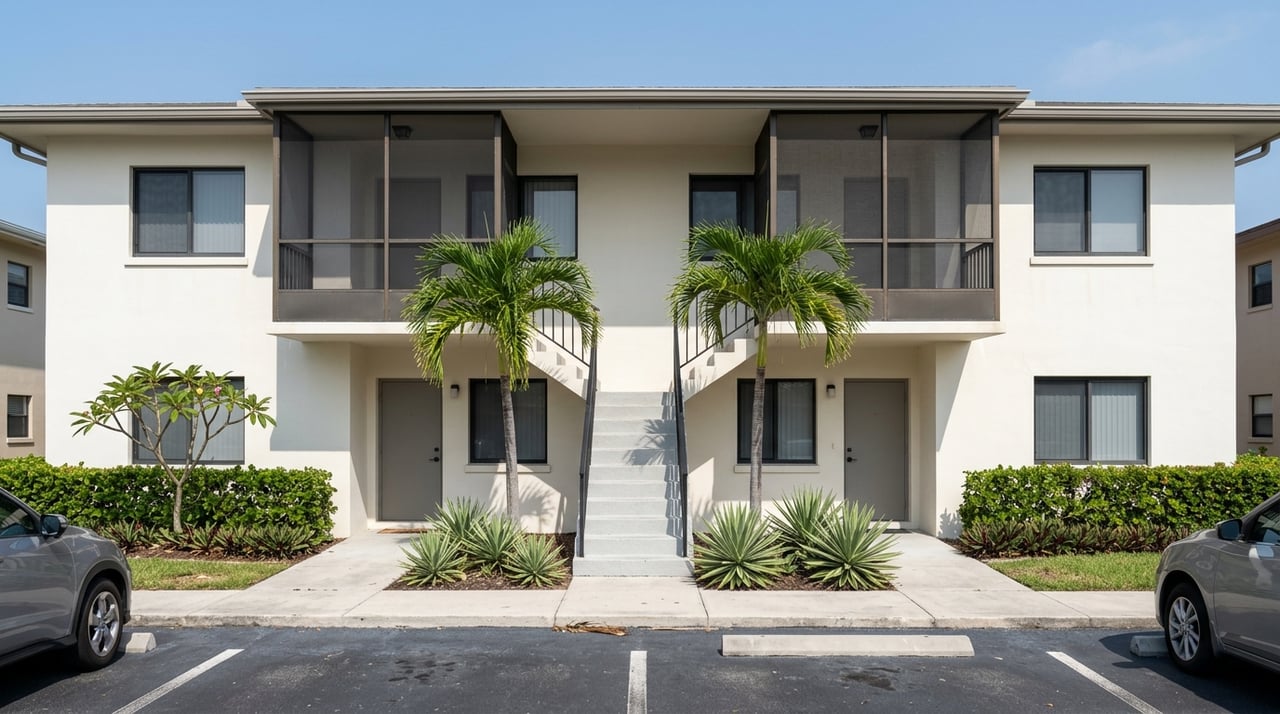
For many investors in Pompano Beach, the first big question is simple: should you buy a condo or a single-family home? The right answer depends on your budget, your tolerance for operational complexity, and your rental plan.
Why condos can look attractive
Condos often offer a lower entry price. In some Pompano Beach submarkets, they can also show stronger rough gross-yield screens than higher-priced coastal properties.
That can make condos appealing if you want to enter the market at a lower price point. They may also fit investors who prefer a more compact asset and less exterior maintenance responsibility.
What condo investors must underwrite
The tradeoff is that condos come with association layers you cannot ignore. In Florida, reserve funding, building conditions, and the possibility of special assessments are major due diligence items.
The Florida Department of Business and Professional Regulation explains that a Structural Integrity Reserve Study, or SIRS, is used to budget for major building components such as the roof, structure, fire protection, plumbing, electrical systems, waterproofing, exterior painting, and windows or exterior doors. If reserves are not adequately funded, associations may need special assessments or loans.
That means your monthly HOA fee is only part of the story. You also need to understand what the association is planning, what repairs may be coming, and whether the budget supports those obligations.
Condo disclosures matter more now
Florida condo resale rules also affect investors directly. Under Florida law, applicable milestone inspection and SIRS disclosures must be provided in condo resales, and buyers may have rights to void the contract if required documents are not delivered as required.
DBPR also notes that structural inspection reports and reserve studies are part of the association’s official records and must be made available to potential purchasers. For you, that means document review is not optional. It is part of buying smart.
Why single-family homes offer more control
Single-family homes and duplexes often give landlords more direct operational control. Florida Statute 83.51 allows some landlord maintenance obligations to be modified in writing for single-family homes and duplexes, which can create more flexibility than a condo setting.
That does not mean fewer responsibilities overall. It does mean you are generally dealing with fewer association rules, fewer approval layers, and fewer surprises tied to shared building systems.
Check Rental Restrictions Before You Buy
This step is especially important if you are considering a condo. Florida Statute 718.110 says certain rental restriction changes, such as prohibiting rentals or changing rental duration or frequency, apply only to owners who consent and to later buyers who take title after the amendment becomes effective.
In practice, that means the actual rental policy for the building still controls your use. You should review the declaration, bylaws, and rules carefully before assuming the unit fits your investment plan.
This is one of the easiest places for investors to make a costly mistake. A unit may look perfect on paper, but if the building limits leasing in a way that does not match your strategy, the deal may not work.
Long-Term vs. Short-Term Rental Strategy
Once you narrow down the property type, the next question is how you plan to rent it. In Pompano Beach, that decision affects not only your income model, but also your compliance workload.
Why long-term rentals are simpler
For many investors, long-term rentals are the more straightforward path. Florida’s Residential Landlord and Tenant Act governs key issues such as security deposits, landlord address disclosure, maintenance obligations, entry rules, tenant obligations, and remedies when a lease is broken or abandoned.
That framework is familiar and generally more predictable for a standard rental property. If your goal is steadier income with fewer moving parts, a long-term lease may be the easier strategy to manage.
Flood disclosure is part of the plan
In coastal Broward, flood risk is not just an insurance topic. Florida Statute 83.512 requires a separate flood disclosure for residential leases of one year or longer.
The law also makes clear that renters insurance does not cover flood damage. If you are underwriting a long-term rental in Pompano Beach, this is a practical issue that affects leasing, risk planning, and tenant communication.
Short-term rentals need the right setup
Short-term rentals can look appealing, but they require the right property and the right paperwork. The City of Pompano Beach defines short-term rentals as leases for six months or less and requires an annual permit.
The city also states that operators must obtain a DBPR transient public lodging license, Florida Department of Revenue registration, a Broward County business tax receipt, and a city business tax receipt. The city may revoke a permit for repeated parking, noise, trash, or other code violations.
That means short-term rental investing is not just about higher nightly rates. It is a compliance-heavy business model that requires careful setup and ongoing oversight.
Condos can limit short-term use
If you are looking at a condo, the city permit is only one part of the equation. The condo declaration, bylaws, and rules may prohibit or limit short-term rentals even if city rules would otherwise allow them.
That is why legal use comes first. Before you project income, confirm the city path and the building rules both support your plan.
Why Management Can Protect Your Returns
Many owners underestimate how much coordination a rental property really requires. In Florida, deposit handling, written notices, access rules, and lease enforcement all carry specific obligations.
For example, state law requires security deposits to be held in a compliant account or bond, requires written notice about where the deposit is held, and sets rules around claims after move-out. Those details can become time-consuming fast, especially if you own more than one property or do not live nearby.
Management also matters when a tenant leaves early. Florida Statute 83.595 says that if a landlord chooses the reletting remedy, the landlord must act in good faith to relet the property.
That means vacancy time has a direct financial impact, and so does the speed and quality of your leasing process. In a market where rental listings are up 4.52% year over year and median rent has slipped 1.03% year over year, efficient leasing matters even more.
For many small landlords, professional support can help keep the process organized. That may include marketing the rental, handling turnover, coordinating association requirements, and staying on top of local compliance needs.
A Smarter Way to Evaluate Deals
If you want to invest in Pompano Beach the smart way, keep your process simple and disciplined. Start with the property’s legal use, then work your way into the full cost structure.
Use this checklist as a practical starting point:
- Confirm whether the property is best suited for long-term or short-term rental use
- Review condo declarations, bylaws, and rules if the property is in an association
- Request applicable building records, reserve information, and required condo disclosures
- Model HOA dues, insurance, taxes, maintenance, reserves, and vacancy
- Factor in flood disclosure requirements for leases of one year or longer
- Review local permit and licensing requirements if you plan a short-term rental
- Compare the property against submarket rent and price trends, not just citywide averages
- Stress-test your numbers so the deal still works if rents soften or turnover takes longer than expected
The goal is not to find a perfect property. The goal is to find an asset whose numbers still make sense after the real-world costs are added in.
Pompano Beach can offer solid opportunities for small investors, especially in a market where buyers may have more negotiating leverage than they did in recent years. The key is to stay disciplined, understand the difference between a promising gross yield and a workable net return, and match the property to the right rental strategy from the start.
If you want local guidance on buying, leasing, managing, or preparing an investment property in Pompano Beach, Red Pin Realty can help you evaluate your options with a broker-led, full-service approach.
FAQs
What makes Pompano Beach attractive for rental property investors?
- Pompano Beach has a substantial renter presence, population growth since 2020, and current market conditions that Realtor.com describes as a buyer’s market, which may give investors more negotiating room.
How should you compare condo and single-family rentals in Pompano Beach?
- Condos may offer a lower entry price and stronger rough yield screens in some submarkets, while single-family homes and duplexes often provide more operational control and fewer association-related variables.
What should you review before buying a Pompano Beach condo as an investor?
- You should review the declaration, bylaws, rules, applicable inspection and reserve documents, and any disclosures related to milestone inspections or reserve studies so you understand rental limits and potential cost exposure.
Are short-term rentals allowed in Pompano Beach investment properties?
- Yes, but the city defines short-term rentals as leases of six months or less and requires an annual permit along with other state, county, and local registrations and licenses.
What flood disclosure rules apply to Pompano Beach long-term rentals?
- For residential leases of one year or longer, Florida law requires a separate flood disclosure, and the law also states that renters insurance does not cover flood damage.
Why can property management help with Pompano Beach rental investments?
- Property management can help owners stay organized with leasing, deposits, turnover, association coordination, and compliance tasks that can directly affect vacancy time and overall returns.